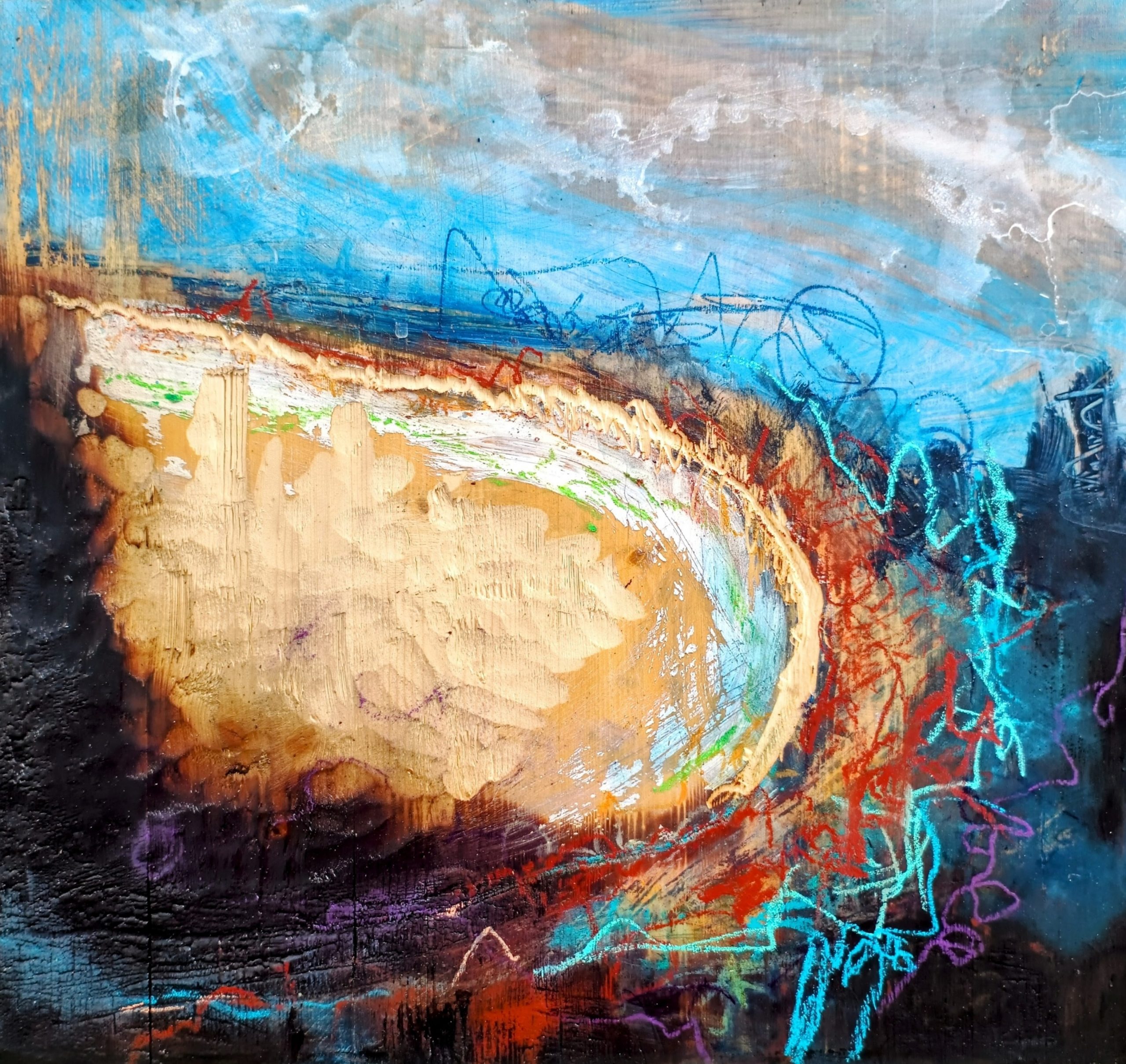
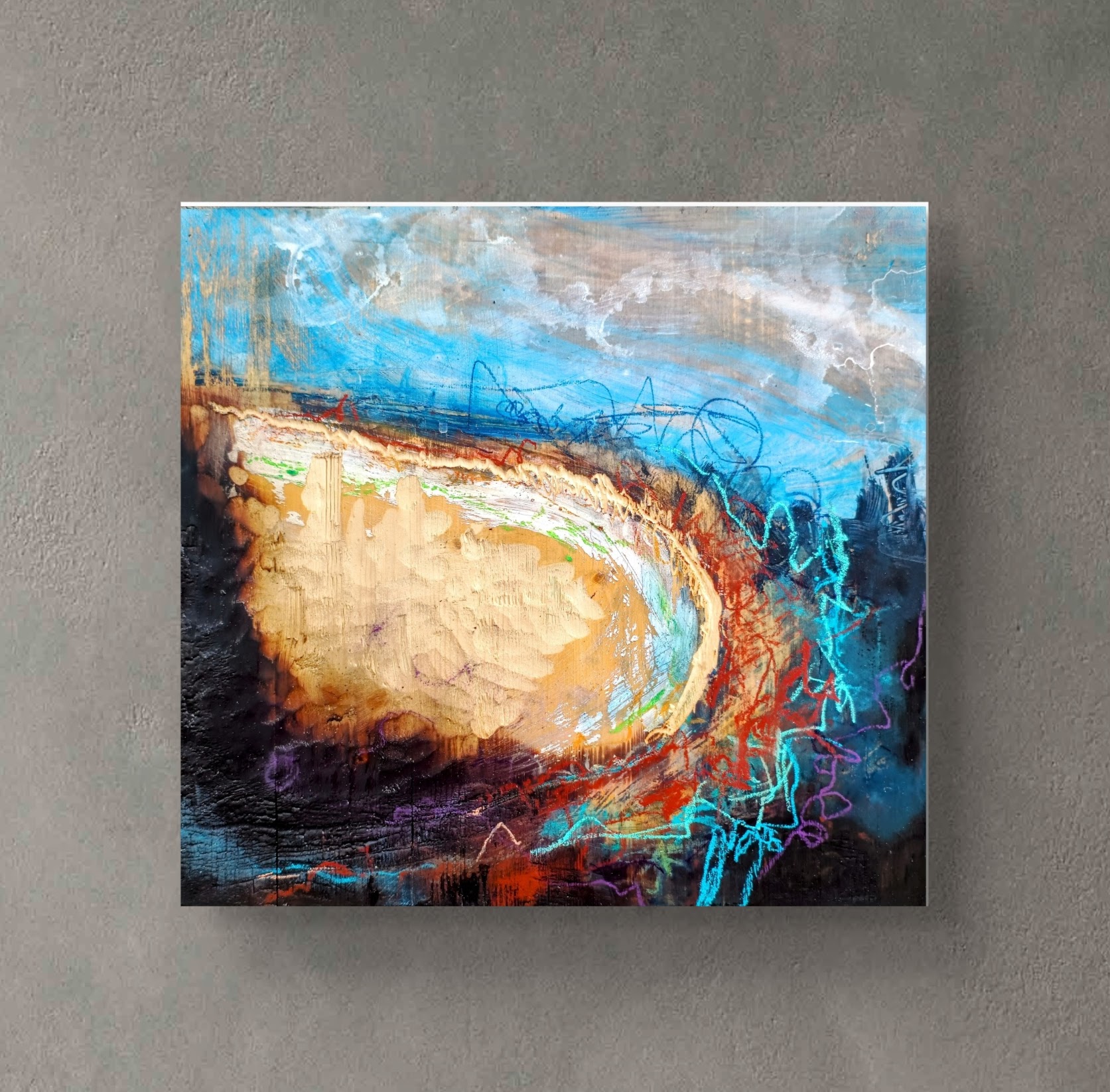
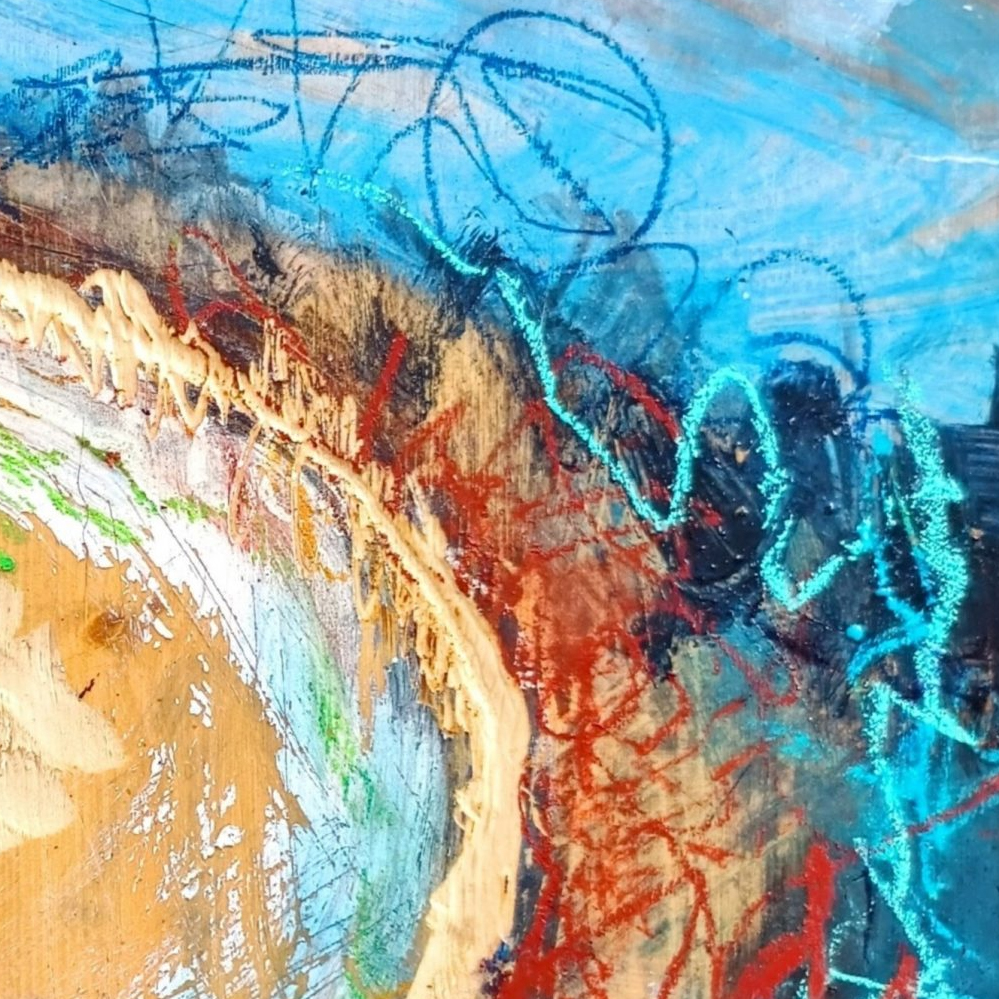
This work is created with timber salvaged from a 1990s wardrobe, abandoned in a house by its previous owners. The wardrobe was built from high-quality Baltic pine, its close, slow-grown grain likely planted around 1950, in the shadow of the Cold War. The wood carries over 75 years of history, shaped by human use, geopolitical tension, and the passage of time, all of which inform the surface and presence of the piece.
The artwork itself has utilised many forms of the wood: carved, burnt, and charred, the timber evokes a footpath along a cliff-like escarpment. The work reflects the danger of standing close to the edge—both literally, along the precipice, and metaphorically, in terms of ecological instability. There is a tension in the piece, a precarious balance that echoes the unease of the era in which the wood first grew, as well as the fragility of the natural and geopolitical world today.