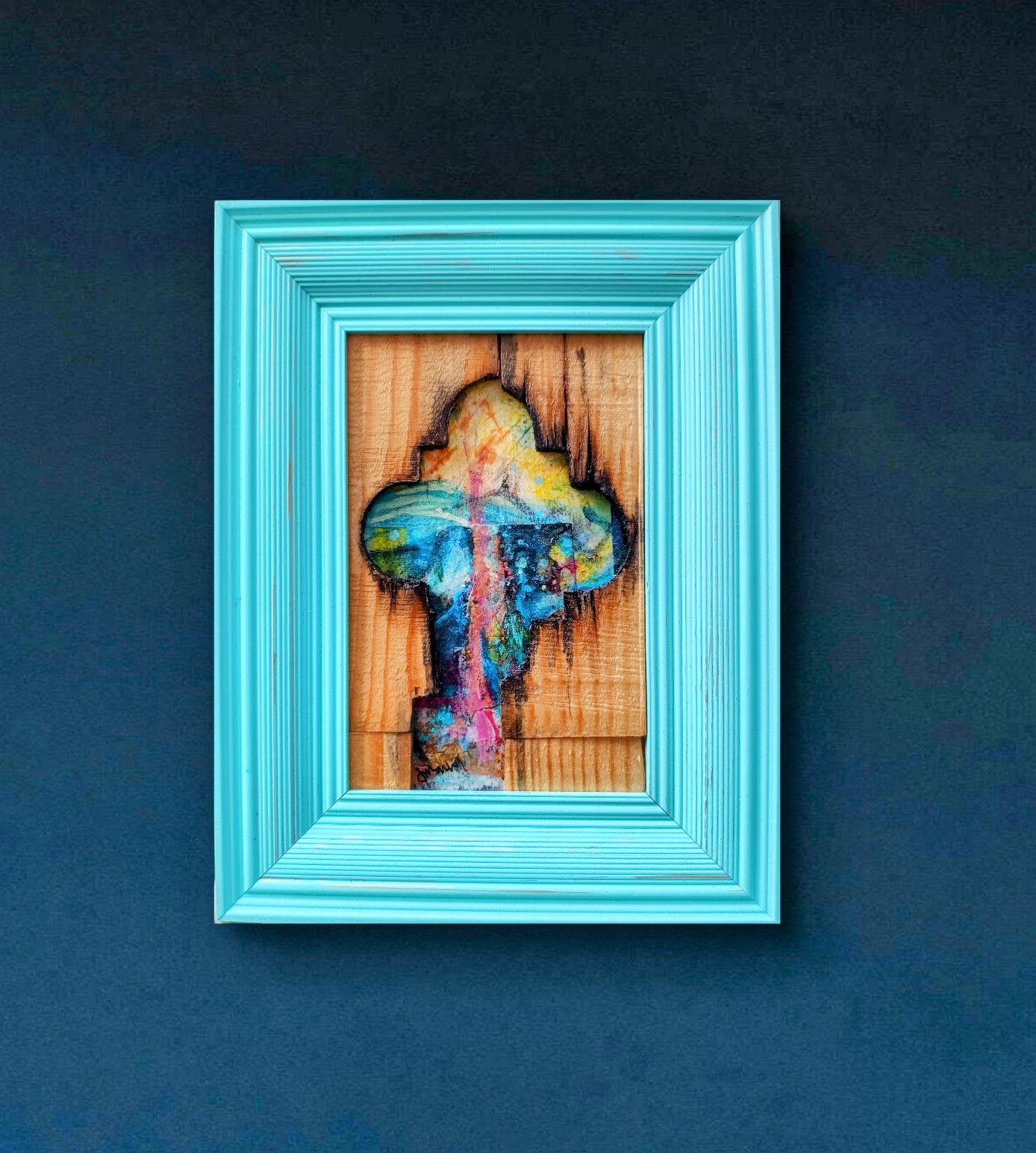
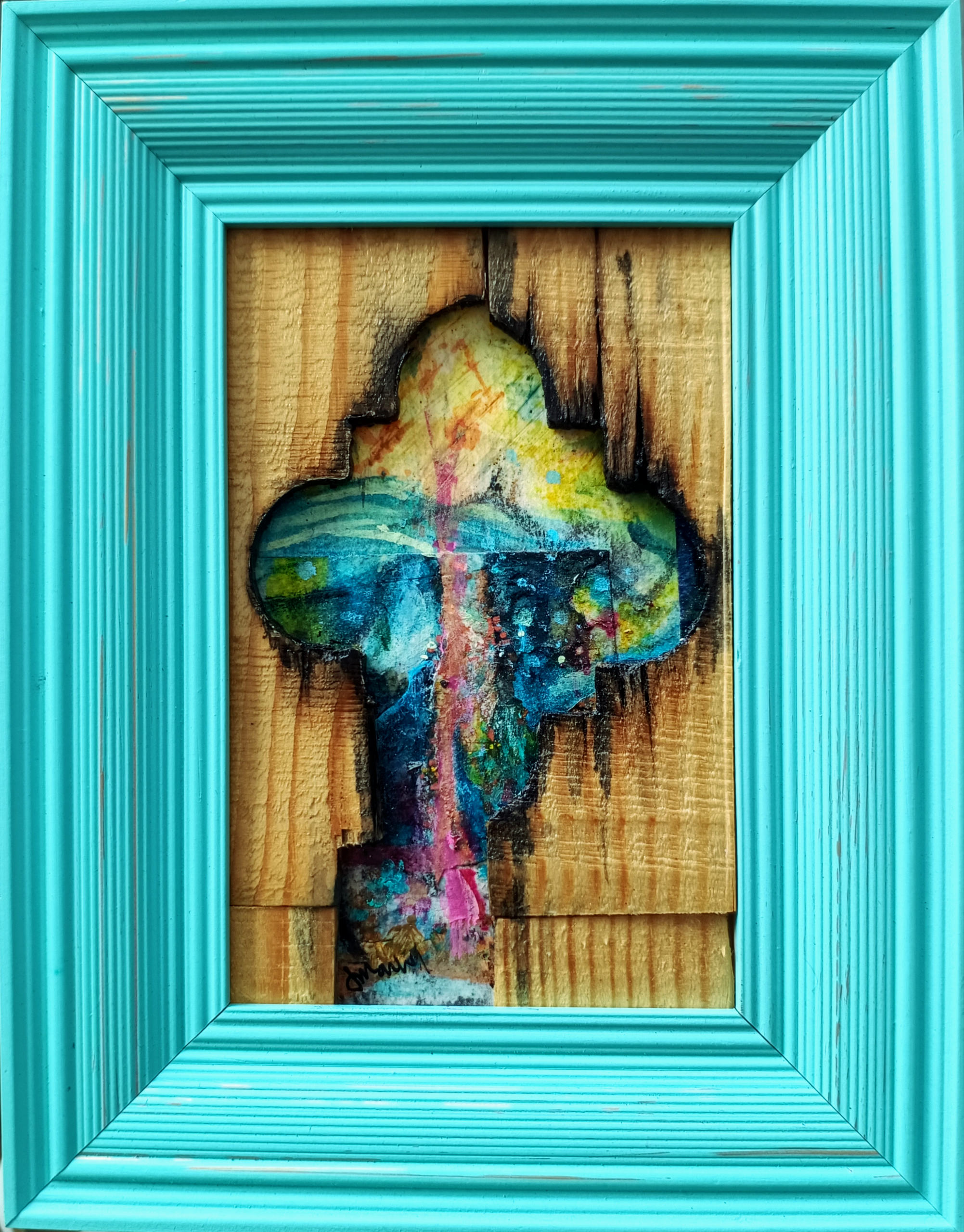
An abstract mermaid form is seen through a decorative aperture cut into rescued Victorian timber, creating a sculptural interplay of figure and ornament. The original pattern of the wood provides structure and rhythm, allowing the mermaid to emerge The wood is Scots pine, planted around 1790 and likely sourced from the Baltic or Scotland. It comes from the gable ends of a recently demolished Victorian house in a Leicestershire village, its decorative shapes repurposed to form the aperture. Once part of the building’s architectural flourish, the timber now frames the mermaid, carrying traces of domestic history while giving new life and rhythm to the composition within a context of historical detail.