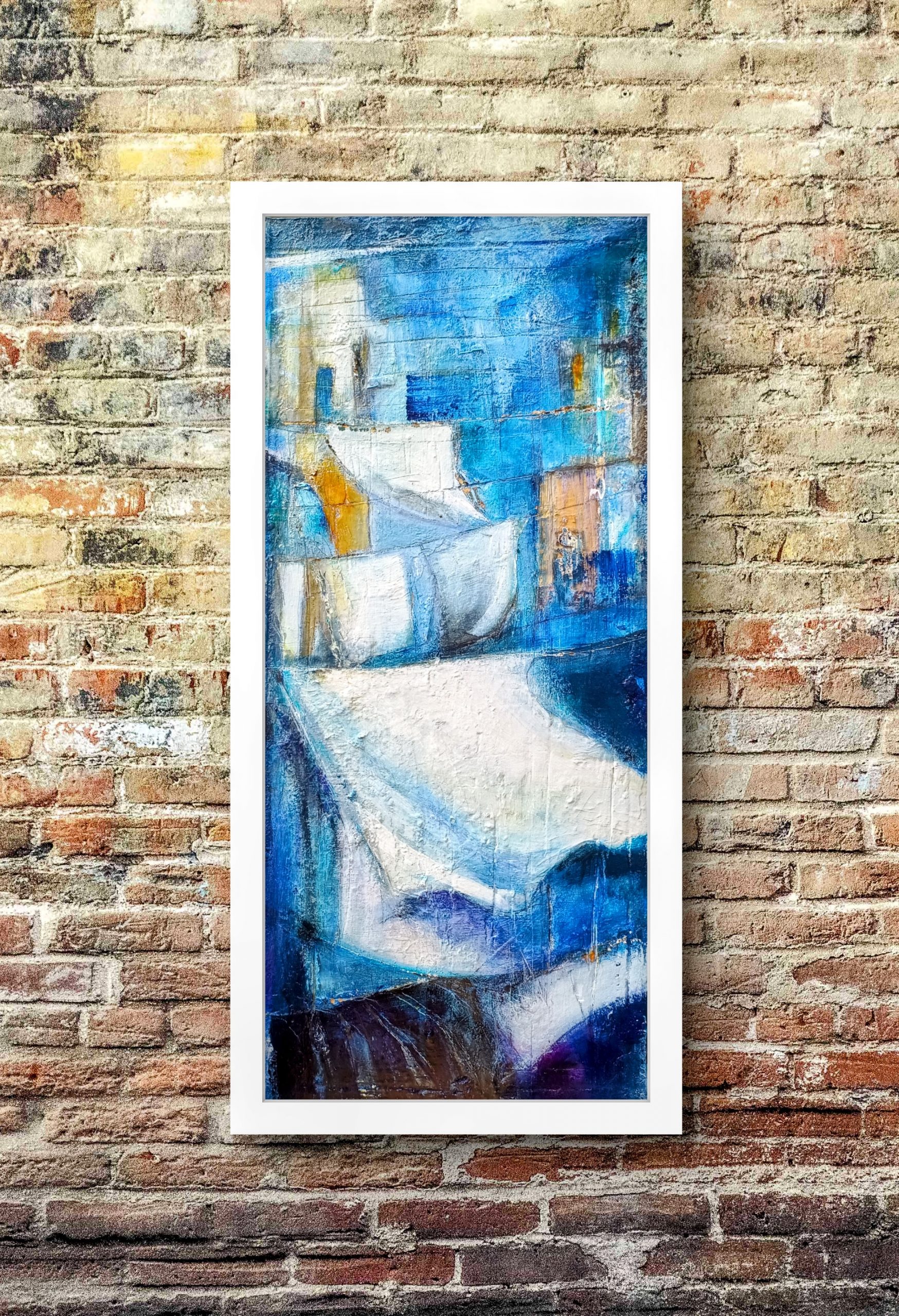
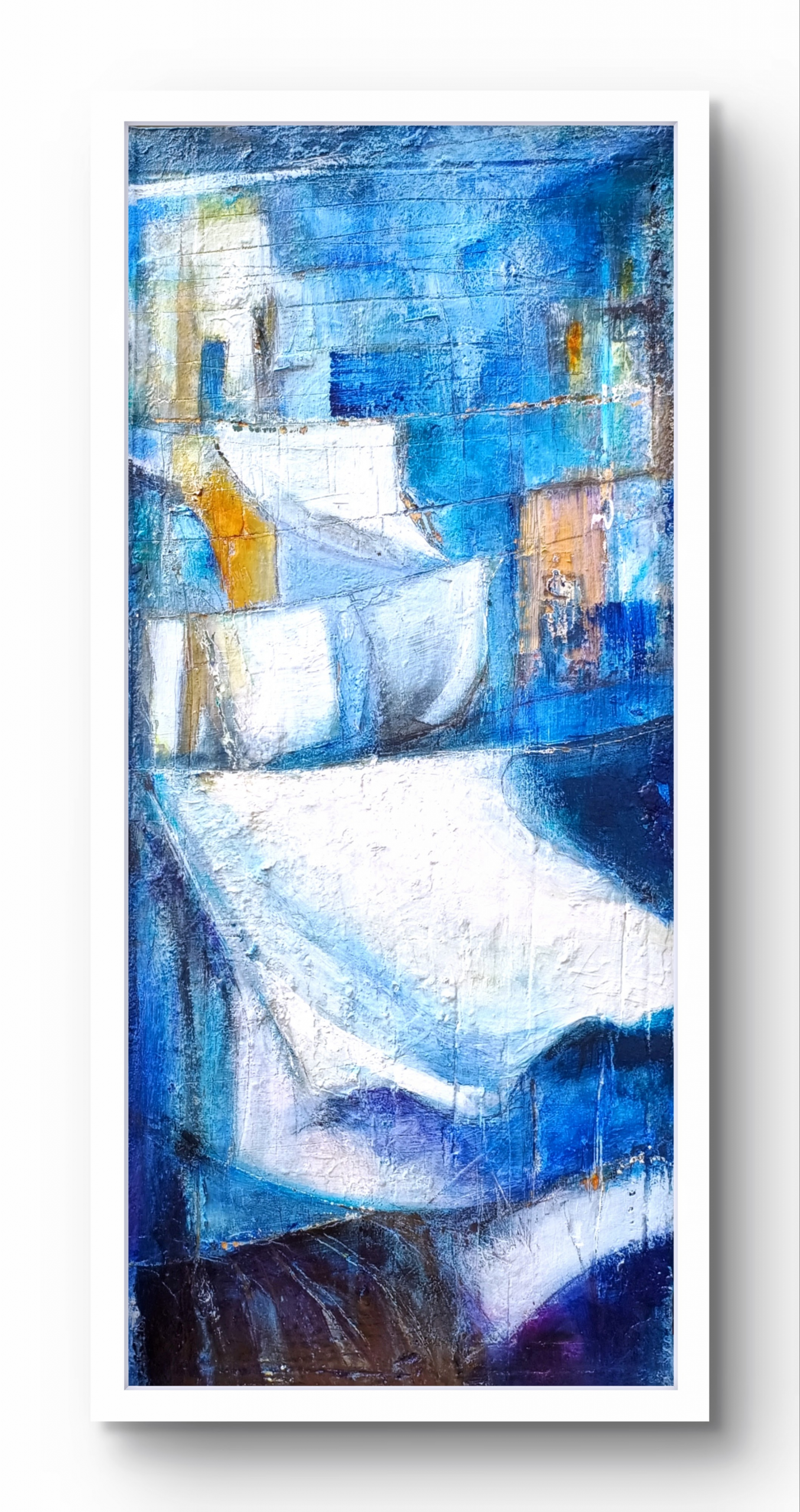
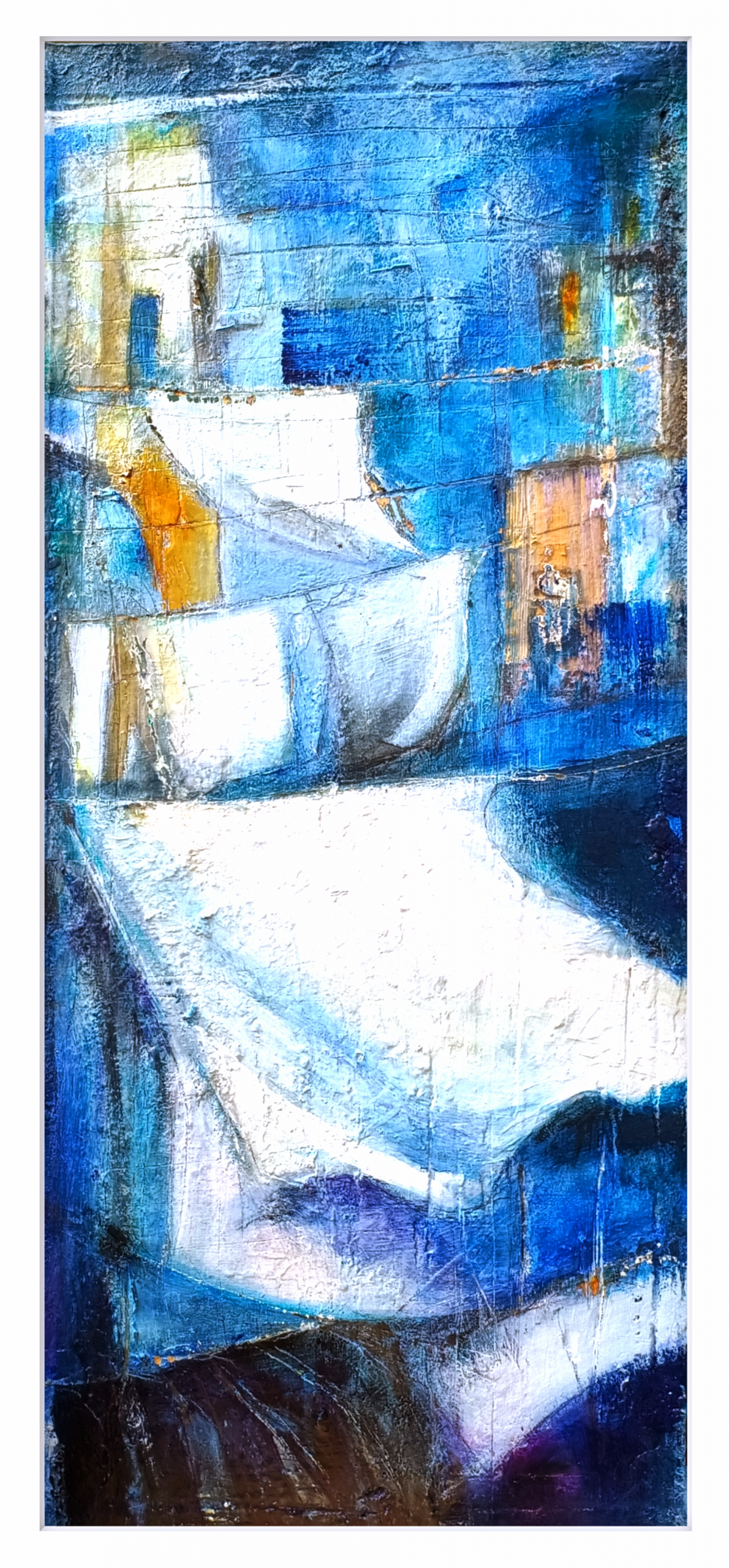
Wash Day Blues sets lines of washing stretched between old buildings against a narrow slice of sky. Sheets carved in relief span multiple lines, their folds and weight marked into the surface. Layers of blue and white accentuate the contrasts of fabric and shadow, while tonal shifts suggest a hot day, deep shade, and the restless movement of cloth caught in a breeze.
The work is created on a tongue-and-groove pine panel rescued from a windmill. The Scots pine, planted around 1830 and fitted c.1890 as part of a sliding cover over a grain hopper, carries with it the history of wind and movement. Likely sourced locally, though possibly imported from North America or Canada, the panel is slightly askew; the narrow gaps it leaves at the frame let in light, echoing both the breeze through sails and the airy geometry of washing hung out to dry.